Friday, March 4, 2011

THE HITCHHIKER'S GUIDE TO THE GALAXY Is The Cinematic Equivalent Of An iPad

I'm a little confused about why we haven't been demanding a filmic version of THE RESTAURANT AT THE END OF THE UNIVERSE.

Douglas Adams' 1980 book, the sequel to THE HITCHHIKER'S GUIDE TO THE GALAXY, is a delightful romp through the absurdities of space and time, and, at the risk of nerd heresy, might actually be better than its famous originator. To me, it's kind of the Jay-Z to HITCHHIKER's Jaz-O. Who's Jaz-O, you ask? Exactly.

I'm not confused about the lack of a sequel because the first film had compelling characters, whose ongoing adventures would make for rollicking entertainment. It clearly didn't. I'm not upset about seeing Sam Rockwell in movies without a shoddy CGI chin-head. I can watch MEN IN BLACK II if I really need to see something like that. It's not even that the story of the HITCHHIKER's movie felt incomplete. It's quite the opposite, in fact. A film of THE RESTAURANT AT THE END OF THE UNIVERSE would be entirely superfluous, an unnecessary continuation on a product that no one particularly enjoyed the first time around.

This brings me to the iPad 2, and THE HITCHHIKER'S GUIDE TO THE GALAXY, the movie.


My confusion is rooted in the clear demand for one of these products, and the complete lack of interest in the other. It's clear that society wants derivative, unnecessary versions of what we've seen before (I'm looking at you, UNKNOWN, or as I like to call you, TAKEN 2: MORE TAKEN), so why can't Touchstone pony up another $50 million or so to send Mos Def back into space? I think it may have something to do with any one, and potentially some combination of, these three factors:

The Singing-Dolphins Paradigm
"So long, and thanks for all the fish" was a funny line in the original book. It is a considerably-less amusing three-minute song that opens the film. For some reason, the script for THHGTTG (which, to be fair, was written by Mr. Adams, a much smarter man than any of us) chooses to expand certain sections of the narrative while rushing through things like the destruction of the Earth and our introduction to major characters. It may be that Mr. Adams and Co. were functioning on a higher narrative level, but it ends up feeling like they don't trust us to pick up on the jokes.

The Zooey Deschanel Uncertainty Principle
This is a law of movie-making that any Zooey Deschanel performance rests on the razor's edge of quality. Will she make our hearts flutter like in 500 DAYS OF SUMMER, or stare dead-eyed into the camera, like in THE HAPPENING? There's simply no way to tell. Rumours that Werner Heisenberg's grandson is working on a formula to help determine this mystery of quantum movie-mechanics have only been answering by loud banging from Mr. Heisenberg's garage and the faint sound of sobbing.

The "Jesus Christ, I Just Saw 16 BLOCKS And Have No Interest In Seeing Mos Def Ever Again, Much Less Funding A Movie He Is In" Reaction

This one pretty much explains itself. Mos Def, the rapper? Awesome. Mos Def, the political activist? Charming, if perhaps a little naive. Mos Def, the anything-else? Uh, I've got a thing, so...

It could be some combination of these factors, but I think the real reason is that while THHGTTG, the object, looks very much like an iPad, the spirit of THHGTTG is anything but. It's cheekily subversive and original. And when we see something new conveyed to us through something derivative, we don't know what to do with it.

What I do know is that if we got each one of the 15 million people who bought an iPad to donate $3, we could send Mos Def back into space. And really, isn't that where he should be? At least until he promises not to do that 16 BLOCKS voice again?

Sunday, February 27, 2011

The Most Ballin' Movie Ever

This is not an article about the greatest movie ever made. I want that to be clear. The word 'best' will not be mentioned once. Well, maybe a few times. But not next to the word 'movie'. This isn't about the most involving screenplay, or the most revealing performance, or the most breathtaking cinematography.

This is about ballin'. Like a beast.

From Urban Dictionary:
ballin' like a BEAST!!!
submitted by j-rob mad fresh
to ball so hard that all the foos who say they ballers get banged out one punch by your awesomeness.

Word, J-Rob Mad Fresh, word.

So what film would best (damn it) define that description? Certainly not CITIZEN KANE. Well, maybe. But KANE seems to lack a certain swagger that ballin' implies. Ditto to GONE WITH THE WIND. GODFATHER PART II seems a little too reserved, scholarly, even, to take the title. BATTLESHIP POTEMKIN? Dude, don't be Uxbridge.

The most ballin' movie of all time is clearly THE SOUND OF MUSIC.


Yes, that THE SOUND OF MUSIC. Don't player-hate (please note the hyphen) because I'm chillin' like a bird. Have you ever seen THE SOUND OF MUSIC? Shit is like jetskis on water.

Okay, we've had enough fun with J-Rob Mad Fresh. But my point remains. There are many words one could choose to describe THE SOUND OF MUSIC, including 'delightful', 'heartwarming', and possibly even 'resonant', but all of these adjectives fail to describe just how badass this movie is. THE SOUND OF MUSIC is straight-up ballin' like a beast.

Now, I'm not sure J-Rob Mad Fresh would immediately approve of his phrase being bandied about like this. But let's examine the evidence. Most films that would aim at the coveted 'Most Ballin'' trophy could be separated into two categories: films that take on morality, and films that take on pure evil.

Take THE GODFATHER PART II, or HEAT, or FIGHT CLUB. These can all be put firmly into the "take on morality" category, and are great films, to be sure. They question our rights and responsibilities, delve into criminality, and question the ethics and values of our culture. They're often morally ambiguous and force you to think about your perspective on those issues. They're ballin' because they question the very essence of life.

On the other hand, you have films like INGLOURIOUS BASTERDS, END OF DAYS, or 12 ANGRY MEN. These films are ballin' because they look evil in the eye and then punch that eye out through the back of evil's skull. They're often criticized by lovers of the first category as being morally simplistic or unrealistic, but if one accepts that there is such a thing as wrong, these films contain a courage just as ballin' as the former.

So, the question emerges: what's more ballin'? Playing chicken with the Devil, or the courage to defy God? The answer is, it doesn't matter, because THE SOUND OF MUSIC does both. Or, more accurately, Captain Von Trapp does.

I think when I say ballin', I'm talking about male role models. All of the films I've mentioned above contain strong male leads who bring an interesting package of masculine traits with them, whether it be Schwarzenegger's strength, DeNiro's codes of honour, or Henry Fonda's moral centre. But none of these guys have anything on Captain Von Trapp's package.

In THE SOUND OF MUSIC, the evil parallels are pretty obvious. There's no better cinematic equivalent for Evil than those pesky Nazis, and, oh boy, does THE SOUND OF MUSIC have some great Nazis. Like rapists, they roll into the virgin green hills of Austria with their red armbands and shiny black boots, then ask Von Trapp to help them or say goodbye to his lovely children. What does he do? Refuses every single one of their demands, kicks them in the shins and then, on his way out the door, gives them a song to remember him by. Take that, you nefarious evil-doers!

But Captain Von Trapp is no sycophantic worshiper at the altar of Good, though. Oh, no. No, he's more on the full-blown heretical side of things there. You see, he steals God's wife. Yeah, remember that whole thing about Maria being a nun? Von Trapp is like, "Fuck that. I'm going to steal this woman from Jesus, right after I tell Hitler to go screw himself, and then we're going to live happily ever after. I might even bang out six or seven more kids. Just try to stop me."

And that's why THE SOUND OF MUSIC is the most ballin' film of all time. Because Captain Von Trapp beats God and the Devil. Now that's ballin' like a beast. He also wears mad fresh sheep, too. J-Rob Mad Fresh would be proud. I know I am.

Thursday, February 24, 2011

When Puns Go Wrong: OCTOPUSSY

Dear Albert R. 'Cubby' Broccoli, U.S. Navy man, film producer, loving husband to three wives and devoted father of three children: I'm glad you're dead.

I mean, I'm happy that you created and produced the Bond films, but let's face it: towards the end there, you were really screwing the pooch.

It's you who bears the brunt of the blame for the horrifying excesses of MOONRAKER, for the increasingly ridiculous pairings of 50-year old Bonds and 20-year old actresses, and I have a feeling you're to blame for the ridiculous title of Roger Moore's sixth appearance as Bond, OCTOPUSSY.


Really? OCTOPUSSY? That's not even trying. You're the same guy that made YOU ONLY LIVE TWICE and LIVE AND LET DIE, great puns both. Of course, you had a little help from Ian Fleming there. But OCTOPUSSY? Why not just give in and call it YET ANOTHER JAMES BOND MOVIE WITH A FLACCID, DECREPIT PENIS SURROUNDED BY SURGICALLY ENHANCED BREASTS?

The Bond films are renowned for a juvenile, smirking attitude towards objectified women, with names like Pussy Galore and Plenty O'Toole looming large in cultural memory, but somehow, to me, Octopussy is offensive on a whole other level, and I think it's because 'Cubby' Broccoli was trying to give women a greater role in the Bond films.

That sounds incredibly sexist. What I mean is, he was trying, and failing miserably. Mr. Broccoli was a product of an earlier, man's-world culture, and the need to update the Bond films to reflect a more inclusive view of sexual politics was simply a job he was not designed for. Starting with 1981's FOR YOUR EYES ONLY, the film preceding OCTOPUSSY, there is a dedicated effort to make women more capable and resistant to Bond's charms, and Bond accordingly more monogamous and respectful (this on the heels of the cringe-inducing "a female doctor?" and "women drivers!" comments of the '70s). However, creating capable, professional women seems like it was antithetical to 'sexy' for Mr. Broccoli and the writers and directors of the '80s Bond films. Often, they settle for one or the other.

Bearing this in mind, the character of Octopussy actually plays an incredibly minor role in the film that bears her name. She's basically a middle man (if you'll excuse the gender-specific phrase), negotiating between the far more sinister villains of General Orlov and Kamal Khan, and eventually is persuaded (sexually, of course) into helping Bond dispose of them. She's kind of insignificant in the grand scheme of things. Naming this film OCTOPUSSY is like calling GOLDFINGER "PUSSY GALORE", in that Ms. Galore shares not only as outrageous a name as Octopussy, but also, a similar role: namely, to be sexually conquered by Bond and made to see the error of her ways, presumably on her way to the kitchen to make James a sandwich.

This often happens to the rarest of character types of the Bond films: that of the independent, financially successful woman. There are usually lesbianic overtones to their independence, their sources of income are often due to the result of some sort of illegal activity, and Bond always forces them away from their success (and vague homosexuality) with his magical transformative dick. Pussy Galore and Jill Valentine are examples of this type from the earlier films, and Octopussy is essentially the same stereotype, just veneered with a gloss of greater importance and an '80s hairdo. The early tagline, "No one does him better" is trying to be as liberating as it is enslaved to the ideology of the past.

Calling the film OCTOPUSSY may have been some sort of token gesture to women viewers, but it simultaneously takes the legs out from underneath that gesture by winking self-consciously at the terrible pun, not to mention the actual limitations of the character. It misses the whole point. In the final analysis, it doesn't indicate any kind of better place for women in the Bond franchise, but is merely the soul of a ten-year old boy giggling at the word "pussy". I'm not sure that'll bring back the female audience, Mr. Broccoli.

I actually enjoy large sections of OCTOPUSSY, specifically the post-titles sequence, wherein a clown-disguised 009 is pursued by a pair of knife-throwing twins and staggers into a diplomatic reception, red nose and all, before dropping a counterfeit Faberge egg at the feet of a shocked ambassador and dying. It's an incredible beginning to a great spy story. There are also some admirable attempts at creating relatively down-to-earth plots and villains, as well as some interesting looks at the Cold War culture. The whole thing is starting to feel the inertia of the Roger Moore era, though, and there's a definite feeling of going through the motions that carries over into A VIEW TO A KILL, in what would blessedly be Moore's final appearance as 007.

'Cubby' Broccoli would go on to make three more Bond films after OCTOPUSSY, almost all of which tried to reinvent Bond and the idea of the "Bond girl". He died during the production of GOLDENEYE, the film that finally brought Bond into the twentieth century. Mr. Broccoli's daughter, Barbara, took over her father's responsibility as the producer of the Bond films. Now, how long will it take for a Bond film to be directed by a woman?

Monday, February 21, 2011

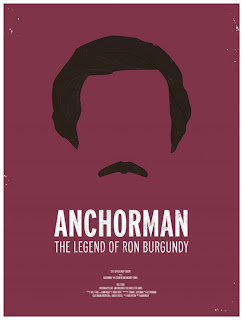
Fetishizing the Past: History, Nostalgia and the Mad (Anchor)Men

I've been catching up on my television watching as of late, and one of the shows I'm finally giving a chance is AMC's "Mad Men". I know, I know. I'm pretty late to the party. But there's a good reason for that.


Every time I would hear about "Mad Men", I'd ask what it was about, and the response would inevitably come back with some variation on, "It's about the sixties ... and smoking ... and sexually harassing women ... and looking awesome in a suit." Well, I would think to myself, I would rather watch THE WIRE eight hundred times in a row than watch that. Then I'd sit back in a smug, self-satisfied way, and convince myself that THE WIRE is the finest piece of American television ever made. Which, to be absolutely clear here, it is.

However, "Mad Men" wouldn't go away. More and more people were talking about it. I started hearing things that intrigued me, like the main character not being who he said he was. I saw a picture of Christina Hendricks and unconsciously did a "Mary Steenburgen in Back to the Future III" impression: golly! And then I heard about the storyline tying into events like the Cuban Missile Crisis.

Now, I haven't got there yet, having only reached episode six of the first season, but this is what truly excites me about this show (or at least this show's potential): I'm a history nerd. I will confess to owning THIRTEEN DAYS. I bought Soderbergh's CHE films, sight unseen. Hell, I own AND STARRING PANCHO VILLA AS HIMSELF, a made-for-HBO movie I had to write an essay on for a history elective and ending up buying because I thought it was so swell. I mean, Antonio Banderas as the legendary Mexican revolutionary? Colm Feore as D.W. Griffiths? Amazing!

I realize few people would echo those exact sentiments (for example, I feel like laughter at Mr. Banderas' casting would be a more common reaction), but I think many people have the same general response to period pieces: a fascination with the past. How else would you explain the enduring popularity of "Mad Men" in spite of the show's lackadaisical pacing?

BAM! Complisulted!

I kid. I haven't watched enough of "Mad Men" to really make an informed judgment yet, but I will say that the first six episodes of HBO's period-piece-response "Boardwalk Empire" has me far more interested in its sprawling story and compelling characters. So far, "Mad Men" is less about any of those things than it is about the fetishization of period details: stainless cigarette lighters, crisply ironed white dress shirts, and the smooth curved lines of bourbon glasses. It's no coincidence that the beautiful DVD packaging of the show features these objects, instead of the characters. At this point, the "smoking... sexual harassment...suits" criticism is bang-on. Not to say that it can't become more, but six episodes in, that is what "Mad Men" is about.

My apologies to everyone who told me that and saw me roll my eyes. You were right.

However, when I watched ANCHORMAN: THE LEGEND OF RON BURGUNDY yesterday, I started wondering where this reverence for the past comes from.


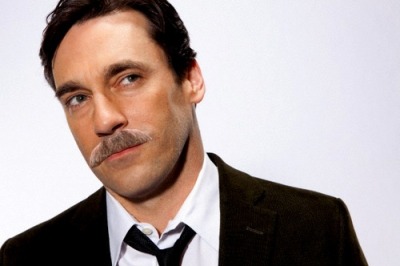
ANCHORMAN and "Mad Men" may not seem the most compatible of entertainments, but once you get past their tonal qualities, they do share a great deal of similarities. In fact, "smoking, sexual harassment, suits" might as well be Ron Burgundy's personal motto. The only noticeable difference between him and Don Draper is the horrifying moustache.

The similarities go beyond the protagonists, though. There is a sense of deep-rooted affection for the entire world that goes beyond a love of character or place: both of these works are in love with the past itself. Of course, the tone in ANCHORMAN is a much more comedic look at the excesses and political incorrectness of the 1970s, but there is a warmth to the innocence of the era that permeates the film.

I guess the word that most defines what we're talking about is nostalgia, and what makes these works so relatable is that everyone experiences nostalgia. It's not so much the specifics of the memory, but the feeling that the act of remembering something evokes. So while none of us (I assume) worked in the advertising agencies of '60s America, or have ever seen a news broadcast from the '70s, we can relate to it, because it feels like we're remembering it (even though we've never actually experienced anything like it).

But why would we want to do this? Why would we want to relive things we haven't lived through in the first place? I think the issue at the heart of nostalgia is that we know how fragile (and important) history is. History is how we construct narratives in every facet of our lives, and without narratives, it's exponentially more difficult to arrive at a truth. Just ask that crazed genius, David Lynch.

BAM! Complisulted!

I kid. But I do think that the reason Mr. Lynch has never dabbled in the historical film genre may be that he's not interested in cinematic meaning deriving from narrative, but rather from mood and emotive qualities. However, on both a personal and societal level, we're constantly examining why we got where we are and how we got there, forming narratives to help us understand. Therefore, memory, both personal and cultural, is one of our most cherished possessions.

And that's why we fetishize the horrifying moustaches and gleaming cigarette lighters of our past: they all tell us something about who we were, where we've come from. It's why we can enjoy Will Ferrell screaming at us for an hour and a half. He's a reflection of us, a chubby, hairy signpost of our history.

And it's why I'll give "Mad Men" some more time to impress me. At least until the Cuban Missile Crisis kicks in. Now who's up for a little THIRTEEN DAYS?

No one? Oh. Okay.

Friday, February 18, 2011

The PAUL Dating Quiz

First things first: this isn't my magazine. It was given to me to review, and I'm a professional, so I'll do it.

I mean, I did already have a copy of it. Technically, it's mine. I bought it. But I don't do it regularly. I don't subscribe or anything. I could say I saw it lying open at a doctor's office, and I flipped a few pages to pass the time, or that it's my girlfriend's, but those would be lies.

My girlfriend? Oh, she's been in the Andromeda sector for years, you can't meet her.

The truth is, I like doing the quizzes.

Small side-note: I would advise you to skip pages 23-29, as the article on the sexual lives of Gamorreans was a little too in-depth for me.

But yes, the quizzes! Is there anything more limitless than a woman's health magazine quiz? Other than the universe, I mean. Ba-doom! Ching! They're great! You can find out if you have low zero-G aptitudes, what spacesuits are best for you, and that always-popular "are you a bitch?" one they seem to recycle every three months. And the best part is, they're always multiple choice! You can't lose, because if you don't like the result, you can just pick a slightly different catty response and become a completely different person!

Although, this cycle's quiz was a bit of a doozy. A real lack of imagination in the available responses.


I mean, Apple? Who would name their child after those monsters? Why not just name your baby Space Holocaust, or Starbuck?

Listen up, COSMIC: we expect better quizzes. I want to indulge in my multiple personalities with rampant glee, so smarten up. You've been put on notice. Hell, just give me the "are you a bitch" thing. Stick with what you know.

Brandon Forsyth blogs from the centre of the Douglas Black Hole. Readers are advised to send comments and criticisms via electronic mail, as lightmail is highly ineffective at this location. COSMIC 32467.2 will be on newstands and hololounges starting Monday, unless there was a miscalculation with the chronocalculator, in which case, we apologize, it won't be published for another 1000 years.