Wednesday, March 16, 2011

Let's Play The Blame Game

BATTLE: L.A. is an atrocious movie.


Just how atrocious? Like a perfect storm of atrociousness. I haven't wanted to get out of a theatre this badly since Clint Eastwood's GRAN TURINO, and I almost ended friendships with people over that movie.

Unlike Clint's grumpy-man-learns-to-love senility exercise though, this is an alien invasion movie. Not only should I have been primed to love this, but even if it was sub-par, I should have at least been entertained. I mean, I'm the guy that watched James McTiegue's THE INVASION all the way through. Remember the $7.25 that made? That was me. Instead, halfway through BATTLE: L.A., I was wondering if I had literally seen every single moment of this movie before, in one form or another, and if a Mad Libs: Army book could have written a better script.

Playing the blame game with this stinking pile of shit is like having complaints about the Oscars: at some point, the well-deserved scorn reaches critical mass, and all you can do is sit back and wonder about the point of the entire process. So instead of bemoaning some of the most horrifyingly condescending ADR I've ever heard, or lamenting the sheer pointlessness of immediately dropping an audience into combat, only to pull them out and drown them in twenty minutes of expositional character scenes, I want to examine the whole point of playing the blame game. Where does disappointment come from, and why do we feel like meting out punishment for those that fail our expectations?

To examine this, allow me to lambast Ridley Scott's BLACK HAWK DOWN, a clear stylistic influence on BATTLE: L.A.


Ridley Scott doesn't get a fair shake around this blog, and I'm damn proud of that. Unlike his brother, Ridley aims for greatness, and while that may be admirable, it makes his failures that much larger. Such is the case with BLACK HAWK DOWN, an intriguing portrait of warfare that completely misses the point of the events it dramatizes. In fact, everything after the 30-minute mark might as well be labelled "Jerry Bruckheimer and the U.S. Army's BLACK HAWK DOWN" in that every U.S. soldier is a shining example of grounded moral fortitude.

Stephen Gaghan, the writer of TRAFFIC and the criminally underrated (and underseen) SYRIANA, tells a great story about being brought in to pitch his take on the events in Somalia to Scott and Bruckheimer. Essentially, Gaghan wanted to end the film on the image of hundreds of dead Somalians wrapped in food shipment sheets, reused as body bags, that had been branded with the stamp "Gift of the U.S.A.". Needless to say, that idea didn't really float Jerry's boat, and the resulting film decides to skirt around the questionable ethics of the situation in favour of celebrating the noble fraternity of the U.S. military (which, God knows, we haven't had enough films about yet). The entire film is a compromise, wherein Ridley gets to play with all of Uncle Sam's nice helicopters, as long as he doesn't say anything too mean about what they do. In an unrelated story, Stephen Gaghan hasn't been able to get a film off the ground for the last six years.

The disappointment I have for BLACK HAWK DOWN is rooted in the fact that it never achieves what it can be, or perhaps more accurately, what I want it to be. There's potential for great drama in the situation, but the film minimizes it and focuses on something we've seen hundreds of times before. BATTLE L.A. has the exact same problem: it doesn't only imitate the visual style of BLACK HAWK DOWN, but the thematic interests as well. I know it's unfair to compare the very real horrors of Mogadishu with an alien invasion used as entertainment; but as far as the filmmakers are concerned, these are both background issues, less important in themselves than how they affect the main characters. So instead of delving into the alien invasion, we get to see Aaron Eckhart telling kids to "be my little Marine", or Michelle Rodriguez sneer her way through another Michelle Rodriguez performance. The problem is that we didn't come to see a movie about a platoon of soldiers: we came to see an alien invasion movie. We don't care about any of these people, and it doesn't help that they're all walking stereotypes that never create a real connection with the audience. They don't connect to a reality, especially not the reality we expected to see.

So if disappointment, at least in this case, springs from not reflecting a reality we expect, what does that tell us about playing the blame game? We traditionally use blame to place the responsibility for failure at the feet of a few select people: for example, Jerry Bruckheimer can be blamed for making BLACK HAWK DOWN a jingoistic ode to the American serviceman, and Ridley Scott can be blamed for bowing to the Army and Mr. Bruckheimer's interests in bringing their vision to the screen. It's comforting to think that somewhere out there, in some alternate universe, there's a version of BLACK HAWK DOWN that didn't involve these two people, and presents a more accurate and responsible picture of the events in Somalia in 1993. It's comforting because the alternative is that the entire system is at fault. BLACK HAWK DOWN was destined to be what it is, and no one could have made it any better than it is, not even Ridley's brother.


Interestingly, I also saw THE ADJUSTMENT BUREAU the other day, a film which has similar questions of fate at heart, then decides, that's interesting and all, but what if Matt Damon has to use the forces of destiny to stop a wedding? I suppose I should be grateful; at least he didn't have to stop Emily Blunt from getting on a plane. THE ADJUSTMENT BUREAU is merely a bad movie, though, not a train wreck that just keeps happening, like some sort of Leslie Nielsen-tinged nightmare, and it feels easy to blame writer/director George Nolfi or studio brass for attempting to shoehorn a traditional romance into a existential sci-fi. There are only three or four choices that ruin the film for me, and make it unrealistic, either logically or emotionally.

When you look at the sheer vastness of the number of horrible decisions involved in almost every aspect of BATTLE: L.A., though, what else can you do but assume that the entire system is irreparably screwed up? We're just going to have to accept that horrible, horrible films will continue to get made until the day we die. Some of us will even pay $7.25 for them.

Now who should I blame for that?

Friday, March 11, 2011

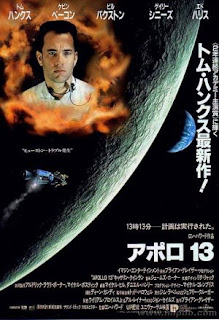
Seriously, If You Can't Enjoy APOLLO 13, Fuck You

I'm just going to come out and say it: every child in the world should be shown APOLLO 13, and if they don't like it, we should just fucking execute them. Humanity will be better off.


Let me assure you that I am being incredibly sincere here. Irony's dominance in modern society can be informative and rewarding, but all to often it is stifling, a time-wasting, ephemeral amusement that neither betters nor develops us. APOLLO 13 is the antithesis of this, one of the most sincere films of all time, and if the children of the future can't turn off their post-modern auto-irony-wired brains for two hours and enjoy it, they should probably just do us all a favour and stop breathing.

Sure, we all like to smirk smugly at the ignorance and stupidity of the world, but APOLLO 13 steadfastly refuses to acknowledge the worst in us, and glories in humanity's ambition. It's one of the noblest Hollywood films ever made, basking in the value of life, friendship, and the interconnectedness of us all.

Ron Howard gets a bad rap, sometimes deservedly (THE DILEMMA, HOW THE GRINCH STOLE CHRISTMAS) and sometimes not (BACKDRAFT, FROST/NIXON), but I don't think anyone can question that APOLLO 13 is his greatest film. When we criticize his work, we're quick to deride him as "Opie", and this criticism is rooted in the irony/sincerity problem. Howard's work is usually rooted in a deep belief in the basic goodness of people and, indeed, the universe. When this attitude is played too prominently, it takes on an "aw, shucks" naivete that we can't help but mock, but when played at an appropriately quiet background level, it feels inspirational and moving. You can't help but tear up when those parachutes deploy at the end of the film.

A large part of the film's effect is James Horner's masterful score, surely one of the greatest in cinematic history. Sweeping moments of triumph punctuate the overriding tension, like the angels of our better nature piercing through the uncertainty of life. It's undeniably memorable, and incredibly uplifting.

However, the key to the film is Hollywood's go-to sincerity man, Tom Hanks. Hanks carries the film with a straightforward earnestness that has been his career trademark. From BIG onwards, Hanks made his mark as the innocent, affable protagonist, which made him particularly appealing in romantic comedies. Here though, his sincerity is played underneath that of the skilled, no-nonsense astronaut, and it's this subrosa approach that makes Lovell so relatable, and in a larger sense, the whole movie so effective. Its emotional sincerity is masked by the more pressing issue of survival.

It is also the best film ever made that understands the sheer awesomeness of space travel. 2001 undoubtedly has cool space stuff, but its dour, philosophical tone robs it of the wizardry of the process. Some of the greatest shots in APOLLO 13 revolve around the characters simply playing with zero-gravity, and you can't help but feel in awe of the entire idea of space travel. Now, I don't know if the children of the future will have any idea what space travel is, other than as words in the solitary history book their entire classroom is forced to share (if they're even teaching history at that point, that is), but that's when we should pop out the APOLLO 13 digital file, disc, or VHS tape and let them just bask in the sheer greatness of mankind.

And if they don't like it, let's just shoot them in the back of the head.

Tuesday, March 8, 2011

Let's All Jump On The "George Lazenby Was OK" Bandwagon

The title of this entry is not meant to indicate that ON HER MAJESTY'S SECRET SERVICE is a flawless film. But ON HER MAJESTY'S SECRET SERVICE is reviled with such passion by its detractors that those of us who kind of like it feel compelled to say a few words in its defence. This compulsion is made even stronger in my case, for one simple reason: I used to hate ON HER MAJESTY'S SECRET SERVICE.


This wasn't a Marion Ravenwood-Indiana Jones hate. My strong feelings weren't just a mask for an actual deep-seated love. It wasn't that kind of hate. I truly, truly hated this film. I found the story dull and uninvolving, the ending tacked-on and reeking of desperation, and I bemoaned the un-Sean Connery-ness of George Lazenby.

This, I think, is the critical complaint at the heart of our problems with Mr. Lazenby's lone portrayal of 007; not that he wasn't Sean Connery, but that he lacked a Connery-ness. This is actually less of a sleight on Lazenby than a criticism on the tone of the film. To put it simply, ON HER MAJESTY'S SECRET SERVICE was trying to do something different, and we didn't like it. Not one bit.

OHMSS (as it will be henceforth called) came on the heels of the three most successful Bond films in history: YOU ONLY LIVE TWICE (1967), THUNDERBALL (1965), and GOLDFINGER (1964). These films all follow the same general formula, in that Bond fights off a massive international conspiracy by seducing gorgeous women and eventually calling in the cavalry (Army, Navy, or ninjas). They're big-budget travelogues, and have a terrific fondness for technological gadgets (cars with ejector seats, jetpacks, and planes that come in four suitcases and are assembled by a team of white-suited technicians). If you're asked for the definitive Bond film, odds are you'll pick one of these. They capture the childhood imagination and root of the Bond phenomenon in ways that few have matched.

When Connery walked away from the franchise after YOU ONLY LIVE TWICE, the Bond producers felt they had to switch up the tone of the series as well. They brought in editor Peter Hunt to direct (a huge responsibility, given he'd never directed a film before) and approved a script that bore little resemblance to their last three efforts. Gone are the hollowed-out volcanoes and death-by-shark scenes, the seductive femme fatales and the cars with machine guns behind the headlights. In fact, the film OHMSS most resembles is FROM RUSSIA WITH LOVE (1963), the second Bond film, which is often cited as one of the best spy films ever made (if not necessarily the best Bond film ever). Bond is vengeful, obsessive, and shows a contempt for authority unheard of in the call-in-the-marines days. The story, while still dealing with a megalomaniac holding the world hostage, is actually remarkably small in scale and is essentially an interpersonal story between Bond and his bride-to-be. It's notable that Bond's famous gadgets are nowhere to be seen, and Q's only scene in the film takes place at the end, where it feels like Peter Hunt has just discovered Desmond Llewelyn in a closet and rushed him to set in a bid to once again remind people that yes, this is a James Bond film.

The phrase "familiarity breeds contempt" has always struck me as half-true, and I think OHMSS is a perfect example of how this idea separates an audience from the filmmakers. The Bond team had spent six years creating very similar entertainment, and picked this moment, the departure of Connery, to radically change not only the star but the tone of their product. By contrast, audiences had experienced only six hours of sex, sun, and violence, and wanted more (bearing in mind, of course, that this was decades before home video). It reminds me of how Jerry Seinfeld expressed his reservations about acting in a movie: "You watch a movie, it's two hours; you're in a bad movie, it's two years. And that's if you're lucky!" (I hope it took considerably less than that to record the dialogue for BEE MOVIE, Jerry). For audiences in 1969, the Bond formula hadn't become familiar yet, and in this case, it wasn't familiarity, but false advertising, that bred contempt. Audiences felt like they hadn't got "a Bond movie".

Looking back on this film, with forty years' worth of ski chases and frogmen with spear guns, this exact same feeling lends OHMSS a uniqueness, and a new value. The story basically takes place on the fringe of government activity (and legality), making the story more personal and immediate to Bond, and the character of Tracey is one of the few '60s Bond girls with a personality that requires more than one sentence to describe (although it wouldn't take too many more than that). The fight scenes have a violence to them that Hunt's keen editorial eye has clearly crafted to maximum impact. And it is still the only Bond film where James Bond cries.

Not that the film is perfect; the fight scenes often use sped-up film, which has not aged well (in one particularly egregious scene, a fight on a beach, the waves seem to be coming in faster than the punches); Telly Savalas' accent and phallic handling of cigarettes is incredibly distracting; and the attempt to make Bond sympathetic to the counter-culture of the '60s come off as weak and half-hearted.

If you nodded vigorously to this last paragraph, but felt unsure about the rest of it, check out ON HER MAJESTY'S SECRET SERVICE again. You might be surprised at how interesting the film is, especially if, like me, you find yourself liking the exact things you remember loathing. Maybe it just depends on what you count as "familiar", and if you're feeling particularly contemptuous.

One thing's sure, though: this bandwagon is getting full.

Saturday, March 5, 2011

Comprehending the Coens and TRUE GRIT

One of my favourite things about watching a movie with a group of friends is sitting through the end credits, making fun of crew nicknames and seeing how many assistants Hollywood stars have. So it was in this spirit that, as the credits rolled on the Coens' remake of TRUE GRIT, and I began to reflect on what I felt about the movie, I noticed the improbable-sounding credit for "Buster Coen, Mr. Damon's Abs Double". As Iris DeMent's "Leaning on the Everlasting Arms" wailed to a merciful end (easily the worst end credits song since Kanye West's "Impossible", by the way), I realized that the Coens have officially stopped giving a fuck.


Now, the origin of this credit might seem to be a cute, familial nod to collaborative filmmaking, but it seems to me that it's more representative about what the Coens are about. Simply put, they make films for themselves, and no one else. Their admirable indie spirit is just as strong today as it was in the BLOOD SIMPLE days.

I would normally applaud such strength of conviction and vision, but in this case, I have a gripe. It seems like in their efforts to resist absorption into the mainstream Hollywood machine, Joel and Ethan have focused on creating increasingly nontraditional narratives, oddball fringe characters, and deliberately unsatisfying climaxes. In TRUE GRIT, they've gone one step further and made their characters as incomprehensible as possible.

I don't mean in terms of the murky human areas of motivation and desire; I mean that you have to strain to hear almost every single fucking word the characters are speaking. The Coens appear to have coached Jeff Bridges to mumble every word out of the corner of his mouth, around a cigarette when possible, and to consistently play with some level of drunken slurring. Hailee Steinfeld spits almost every line in a manner more resembling a semi-automatic rifle than a human being. They even cut Matt Damon's tongue and try to take out a tooth at one point, in an effort to drown his Texas drawl in a swirl of blood and enamel. I found myself wishing there were subtitles several times.

All of this seems puzzling, given the Coens' reputation for verbatim reads of their scripts, every word carefully placed and measured for effect. It's difficult to imagine the TRUE GRIT script filled with the contractions, mumbling, and elided consonants of the final product. It would be impossible to read, both like and completely unlike a transcription of BBMing between Justin Bieber and Selena Gomez (or at least what I imagine that transcription would look like).

In the light of "Buster Coen, Mr. Damon's Abs Double", though, this incomprehensibility could make a lot more sense. If the Coens are truly making films for themselves, than they probably don't care about transferring their words to us in a clear, unambiguous way. You can't understand what he's saying? SCREW YOU, WE MADE "FARGO"! This also makes sense of the biggest question inherent to TRUE GRIT: namely, why remake TRUE GRIT? Because the Coens wanted to. You see how this works?

Of course, this theory could be completely wrong. I might have just seen TRUE GRIT in a theatre with bad speakers, and blown this whole thing out of proportion. I reserve the right to completely erase this article if I see it with headphones and can make out what's going on.

But I don't think that's going to happen. Bad speakers won't explain "Buster Coen, Mr. Damon's Abs Double".

Friday, March 4, 2011

THE HITCHHIKER'S GUIDE TO THE GALAXY Is The Cinematic Equivalent Of An iPad

I'm a little confused about why we haven't been demanding a filmic version of THE RESTAURANT AT THE END OF THE UNIVERSE.

Douglas Adams' 1980 book, the sequel to THE HITCHHIKER'S GUIDE TO THE GALAXY, is a delightful romp through the absurdities of space and time, and, at the risk of nerd heresy, might actually be better than its famous originator. To me, it's kind of the Jay-Z to HITCHHIKER's Jaz-O. Who's Jaz-O, you ask? Exactly.

I'm not confused about the lack of a sequel because the first film had compelling characters, whose ongoing adventures would make for rollicking entertainment. It clearly didn't. I'm not upset about seeing Sam Rockwell in movies without a shoddy CGI chin-head. I can watch MEN IN BLACK II if I really need to see something like that. It's not even that the story of the HITCHHIKER's movie felt incomplete. It's quite the opposite, in fact. A film of THE RESTAURANT AT THE END OF THE UNIVERSE would be entirely superfluous, an unnecessary continuation on a product that no one particularly enjoyed the first time around.

This brings me to the iPad 2, and THE HITCHHIKER'S GUIDE TO THE GALAXY, the movie.


My confusion is rooted in the clear demand for one of these products, and the complete lack of interest in the other. It's clear that society wants derivative, unnecessary versions of what we've seen before (I'm looking at you, UNKNOWN, or as I like to call you, TAKEN 2: MORE TAKEN), so why can't Touchstone pony up another $50 million or so to send Mos Def back into space? I think it may have something to do with any one, and potentially some combination of, these three factors:

The Singing-Dolphins Paradigm
"So long, and thanks for all the fish" was a funny line in the original book. It is a considerably-less amusing three-minute song that opens the film. For some reason, the script for THHGTTG (which, to be fair, was written by Mr. Adams, a much smarter man than any of us) chooses to expand certain sections of the narrative while rushing through things like the destruction of the Earth and our introduction to major characters. It may be that Mr. Adams and Co. were functioning on a higher narrative level, but it ends up feeling like they don't trust us to pick up on the jokes.

The Zooey Deschanel Uncertainty Principle
This is a law of movie-making that any Zooey Deschanel performance rests on the razor's edge of quality. Will she make our hearts flutter like in 500 DAYS OF SUMMER, or stare dead-eyed into the camera, like in THE HAPPENING? There's simply no way to tell. Rumours that Werner Heisenberg's grandson is working on a formula to help determine this mystery of quantum movie-mechanics have only been answering by loud banging from Mr. Heisenberg's garage and the faint sound of sobbing.

The "Jesus Christ, I Just Saw 16 BLOCKS And Have No Interest In Seeing Mos Def Ever Again, Much Less Funding A Movie He Is In" Reaction

This one pretty much explains itself. Mos Def, the rapper? Awesome. Mos Def, the political activist? Charming, if perhaps a little naive. Mos Def, the anything-else? Uh, I've got a thing, so...

It could be some combination of these factors, but I think the real reason is that while THHGTTG, the object, looks very much like an iPad, the spirit of THHGTTG is anything but. It's cheekily subversive and original. And when we see something new conveyed to us through something derivative, we don't know what to do with it.

What I do know is that if we got each one of the 15 million people who bought an iPad to donate $3, we could send Mos Def back into space. And really, isn't that where he should be? At least until he promises not to do that 16 BLOCKS voice again?